Showing posts with label Sixties. Show all posts

Wednesday, August 3, 2011

SET THE NIGHT ON FIRE at KindleBoards


Hi, all. Those of you who are on KindleBoards might be interested in a discussion about SET THE NIGHT ON FIRE. It's part of their "Read With The Author" Book Klub, which they're in the process of reviving. I am one of six authors they asked to lead a discussion, and I had the "good fortune" to be the guinea --er -- first.

So, I'd love it if you popped over and put in your two cents. There are a bunch of threads, but you really don't have to have read the book to participate -- some of them are pretty general.

Thanks. See you over there.

Wednesday, July 20, 2011

Today's Sizzling Summer Read -- SET THE NIGHT ON FIRE by Libby Hellmann


"A tremendous book - sweeping but intimate, elegiac but urgent, subtle but intense. This story really does set the night on fire." --Lee Child

"A brilliantly-paced thriller, transitioning seamlessly from modern-day Chicago to the late '60s. First-rate characterization...Best to start early in the day, as it is easy to stay up all night reading it." --Foreword Magazine

"RT Top Pick for December: "Electric... a marvelous novel."
--RT Book Reviews

"Set the Night on Fire is a compelling story of love, truth and redemption. This will be a break-out novel for this talented writer. Highly recommended." --Sheldon Siegel, NYTImes bestselling author of Perfect Alibi

"A top-rate thriller that taps into the antiwar protests of the 1960s... A jazzy fusion of past and present, Hellman's insightful, politically charged whodunit explores a fascinating period in American history."
--Publishers Weekly

That's what reviewers are saying. Here's what I say:

TRUE CONFESSION:

I do remember the Sixties.

Especially 1968. That was the turning point in my political "coming of age." I was in college in Philadelphia on April 4th when Martin Luther King was assassinated. I watched as riots consumed the inner cities. I was saddened and disappointed -- as a teenager growing up in Washington DC, I'd gone to plenty of concerts at the Howard theater where blacks and whites grooved to Motown artists together. I actually thought we were moving towards a color-blind society -- I was young and idealistic then). So the frustration and rage expressed through the riots was - in a way- confusing.

Two months later I understood. My college boyfriend had been tapped to head up the national "Youth for Bobby Kennedy" program. I was really excited; I planned on dropping out for a semester to work with him. For some reason I couldn't sleep the night of June 5th and turned on my radio. Bobby had been shot just after winning the California Democratic primary. He died the next day. So much for the Youth for Kennedy campaign.

Sadness soon gave way to bitterness. The country was falling apart. Over the years some of our brightest lights had been snuffed out. Internationally our government seemed to be supporting the "bad guys." And underlying it all was an unwinnable war that - perversely -- was escalating and risking the lives of my peers. I began to question why I should work through the system, especially when the system wasn't working for us.

I wasn't alone. Plenty of others yearned for change. Fundamental change that would rebuild our society and culture. The next few years were tumultuous and volatile, but in the final analysis, we failed. Maybe the task was impossible -- how many Utopias exist? Sure, there were cultural shifts. But political change, in the sense of what to expect from our leaders and our government? Not so much. The era left me with unresolved feelings. What should we have done differently? Are all progressive movements doomed to fail?

At this point you're probably wondering what this has to do with writing a thriller. And you'd be right. It's never been my intention to write a political screed. I am a storyteller whose stories, hopefully, you can't put down. I realized that if I was going to write about the Sixties, I needed a premise that would hook readers in the present, regardless of how much they know or remembered about the Sixties.

I found that premise in a film. Do you remember SIGNS, starring Mel Gibson? It came out in 2002, and I thought the first half was the most riveting film I'd ever seen. Gibson's family is being stalked, but they don't know who and they don't know why. The second half of the film, when we discover it's just your garden variety aliens, was an enormous let down. Putting a face, an identity, on fear reduces its power. But NOT knowing who's targeting you -- or why -- is the most frightening thing I can imagine.

So that's what happens to Lila Hilliard, a thirty-something professional who's come home to Chicago for the holidays. Someone has killed her family, and now they're after her. She has no idea who or why. As she desperately tries to figure it out, she finds wisps of clues that lead back to her parents' activities forty years ago. In the process she discovers that her parents were not the people she thought.

The relationship between the past and present, the consequences of events that occurred years ago fascinate me. I also love stories that plunge characters into danger and make them draw on resources they didn't know they had. SET THE NIGHT ON FIRE was the way to combine all those themes. Writing the book was an exorcism of sorts, a way to make peace with the past. And while I enjoyed reliving the past, I loved putting it behind me even more. I'm finally ready to move on.

I hope you enjoy the read. To buy the book from Amazon click here. From Nook, here. And for more about the book, and me, and everything else, just click here.

Wednesday, April 27, 2011

SET THE NIGHT ON FIRE now 99 cents thru May


The price of my latest thriller, which goes back, in part, to the late Sixties in Chicago, has just come down to 99 cents on Kindle. Here's what they're saying about it:

"A tremendous thriller, sweeping but intimate, elegiac but urgent, suble but intense... this story really does set the night on fire.." Lee Child

"Superior .. Passion, pain, and protests emerge in vivid detail.." Chicago Tribune

"A jazzy fusion of past and present, Hellmann's insightful, politically charged whodunit explores a fascinating period in American history..." Publishers Weekly

You can find it here. The price will go up again in June, so I hope you'll give it a look now.

Thanks.... Libby

Sunday, April 24, 2011

Two Sixties Stories

By Libby Hellmann


As some of you know, my most recent novel, SET THE NIGHT ON FIRE, is a thriller that goes back, in part, to the late Sixties in Chicago. Fortunately or unfortunately, I remember those years and would like to share with you two stories from that time. An abbreviated version of one – a love story -- is in the book, but the other has an ending I just discovered a few months ago.


I lived in Georgetown during what I now call “The Summer of My Discontent.” I shared an apartment with four other people above a movie theater at 28th and M. (Both are gone now). I was working at an underground newspaper, selling them on the streets, and generally trying to make sense of the world. Next door to the movie theater was a head shop run by a weird – but sweet -- guy named Bobby. He wore black all the time, before there were Goths. The scent of Patchouli oil hung in the air.


I used to drop in every once in a while. Often two of his friends, Donna and Linda, would be there. They were a couple: Linda had long brown hair and appeared to be kind of spacey. Donna had short blond hair and wore a leather jacket, even during July. They were cool, though, in the way that everyone was cool back then, and we’d smoke a joint, laugh a lot, and discuss what a shitty place the world was becoming. Then, around August, they disappeared. After not seeing them for a week or so, I asked Bobby where they went. He hemmed and hawed and wouldn’t tell me. Finally, he did.


Donna used to be Don, he said. And was going through the process of becoming a woman, but hadn’t completed it when she met Linda. They fell in love, and because of that, they jointly (no pun intended) agreed that Donna should turn back into Don. So they hustled some money from someone and were off to California to reverse Donna’s transformation.


That’s what I call a love story. Btw, I never saw them again, but I still think about them.


The other story is more political. As I said, I worked at an underground newspaper in DC for a summer. I was just a flunkie, not even considered staff. But there was a photographer, Sal, who was in and out all the time. He took photos at every demonstration, interview, and event that could be considered “alternative.” I actually had a crush on him at one point. (Yes, I know. Very bourgeois).
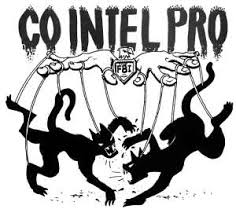

At any rate, the editor of the newspaper was very cautious about trusting people, almost to the point of paranoia. He always thought the paper was being infiltrated by CIA or FBI types (these were the days before COINTELPRO proved the FBI was indeed infiltrating radical groups) At the time, I thought his paranoia was exaggerated. Triggered perhaps by an inflated sense of self-importance.


I left at the end of the summer to hitchhike across country (That’s a different story), but I heard a few months later that Sal had left too, and was off to Paris. He stayed there for a while, then disappeared. I never knew what happened to him.


Then, about a month ago, well after I finished SET THE NIGHT ON FIRE, I Googled some of the people from the newspaper. Suddenly a photo of Sal popped up. It turns out he had been featured in Secrets: The CIA's War at Home by Angus MacKenzie.


You guessed it. Sal had been a CIA agent, recruited when he was in college in Chicago. The entire time he was taking photos for the paper, he was reporting to his CIA handler. Eventually, I think the editor suspected him. Maybe he even confronted him, which precipitated his abrupt departure.


It doesn’t end there. According to MacKenzie’s book, Sal went to Paris, befriended Philip Agee, himself a former CIA agent turned whistleblower, and fiddled around with the typewriter on which Agee was writing his story. Agee discovered it, and Sal fled. From what I understand he changed his name and now lives in Southern California.


True stories. Really. I mean, who could make this stuff up?