Sunday, April 8, 2012

Signing THE HUNGRY at Dark Delicacies in Burbank


From left to right co-author Steven W. Booth, visitor actor Kurtwood Smith (70's Show, Robocop, Dead Poet's Society) and Top Suspense Group member and co-author Harry Shannon. The Hungry is a fast-paced, comic zombie novel now in paperback as well as on Kindle.

Saturday, April 7, 2012

Pre-order Monster Now!


Available August 2nd from Overlook Press. Pre-order your copy today!

The supernatural, unmissable new novel by the ALA Best Horror award nominee. In nineteenth-century Germany, one young man counts down the days until he can marry his beloved . . . until she is found brutally murdered, and the young man is accused of the crime. Broken on the wheel and left for dead, he awakens on a lab table, transformed into an abomination. Friedrich must go far to take his revenge --only to find his tormentor, Victor Frankenstein, in league with the Marquis de Sade, creating something much more sinister deep in the mountains. Paranormal and gripping in the tradition of the best work of Stephen King and Justin Cronin, Monster is a gruesome parable of control and vengeance, and an ingenious tribute to one of literature's greatest.

Victor Frankenstein. Marquis de Sade. Witch burnings. Vampyres. Devil worshipers. Depraved London sex clubs. Street gangs. Vengeance. Obsession. Damnation.

Friday, April 6, 2012

Old Dog, New Tricks

Warner Hollywood Studios

Lee Goldberg here...
Recently,  I had the opportunity to stick my big, one-hour drama toe into the sitcom world, courtesy of a friend of mine who is writing & producing a pilot for a major network. Much to my surprise, he invited me to the studio one afternoon a few weeks back to participate in the initial punch-up of the script...along with a roomful of Emmy-award winning,  comedy legends, like my friend Ken Levine  and his partner David Isaacs. I figured I'd just sit in the corner, keep my mouth shut, and watch the masters at work. 
But like the lead character in the pilot, sometimes my mouth and my brain don't always work in concert. I was only there for a few minutes when I contributed a joke...which went over only slightly better than if I'd vomited on the table. I decided to keep my mouth shut. That resolve lasted perhaps five more minutes, when once again I heard myself suggesting a joke...which went over so badly, I expected security to be called to escort me out of the studio.
I know I can be funny...when I am sitting at the computer, by myself, writing. And I know I can be amusing on panels or when speaking in public. But I'd never had to be funny on-demand, to contribute specific jokes to serve a plot point or character beat. 
Who the hell was I to think that I could participate?  I decided I was going to just shut up, listen, and learn. But then, the more I listened, I realized thateverybody was offering stinkers as well as winners...for every ten bad jokes someone threw out, perhaps one would stick. And before I knew it, I was throwing another joke into the mix...and to my shock, everyone laughed and my buddy put it in the script. 
I was ridiculously pleased and my reluctance to participate evaporated. I stopped feeling so self-conscious about my horrible jokes and did what everyone else was doing -- sharing whatever came to mind. And to my delight, a couple more of my jokes got laughs...and found their way into the script in some form or another.
I ended up having a wonderful time and learning how a comedy writers room differed from the "drama" rooms I'd been part of for most of my career. 
IMG_0266
The closest I've ever come to something approximating the punch-up experience was writing for MONK. Andy Breckman and his writing staff all came from SNL or Letterman or stand-up, not the episodic world, so they were always throwing out jokes...but we were still writing a mystery, and the room, and the plotting, felt comfortable and familiar to me. I knew I could do the job and I didn't feel any pressure to be funny. I was more likely to offer a funny situation to the room than a joke, per se.
But in the punch-up room, story structure wasn't the main issue. It was making the funny stuff funnier...creating new jokes to address specific problems. I've re-written scripts before...and made funny scenes funnier...but never on-demand in front of a room of other writers. Rewriting has always been a private affair.
But one thing the punch-up experience shared in common with all of my other writing room experiences was that brainstorming was encouraged, that even bad ideas were welcomed because they could lead to good ones. In that respect, throwing out jokes was no different than suggesting clues, plot points, character beats, or any other aspect of writing a drama. 
It was a great day...it was an honor and a thrill just to be in the room with all of those extremely talented and acclaimed writers... to see how their minds worked...and how they worked with others.
The last thing I expected was to be invited back.
But I was. 
The pilot has now been cast,  a major director has been signed, the sets have been built, and it will be shot this week. Today I was invited back to help punch up the script following the final run-through.
This, too, was an entirely new experience for me. An entirely different group of comedy writers were gathered this time to watch the show on its feet, to see what worked and what didn't, then help the showrunner tweak the script to address network notes and smooth out some last-minute bumps that emerged during the staging.
So that's what we did. We watched a full run-through of the show, then locked ourselves in a conference room with a deli platter, soft drinks, a stack of scripts and lots of pencils. It was a lot like my previous experience...only scarier, because two top-level studio execs would be sitting in on the punch-up. I had no idea what I was supposed to do, what the rules were, or how this was supposed to work. But I knew if I made a fool of myself, the studio execs would certainly remember.
My friend, the showrunner, went through the script scene-by-scene, telling us what the problems were that had to be addressed and asking the writers in the room, all good friends of his, for their thoughts on any other bumps he might have missed.
People threw out new jokes and, once again, I hesitantly offered one of my own...that clearly nobody liked. It was as if I'd dropped my pants and urinated in the middle of the room. Well, at least that's how it felt to me.
More jokes flew around. I hesitantly offered another one, also D.O.A.  I was a fraud, a witless moron who had no place in a room full of professional comedy writers... so I tossed out one last joke to confirm what I already knew about my failings.
Everyone laughed.  And then they took that joke and started improving on it. So I added a tweak of my own. The joke went in to the script.
There was a young writer in the room who was absolutely fearless. Or perhaps "shameless" is the better word.  He threw out one joke after another....dozens of them, most of them lousy, and just kept doing it until he hit on something hilarious... and if that wasn't the joke that went in, it led the room to the one that did.
I learned a valuable lesson from him -- I realized my biggest problem was my hesitancy. I had to commit to my jokes, or go in the opposite direction, throw them out casually, without worrying about whether they were any good or not. 
From that moment on, I contributed whatever came to my mind...and was surprised, and ridiculously pleased, by how much of my stuff either made it in, or inspired someone else in the room to come up with something much, much better than what I'd offered, but along the same lines.  We began to work as a big team, backing each other up. It was great fun.
I have no illusions about being any good at this, or that I came close to holding my own with the far more talented people in the room, but I had a great time...it actually felt good to be scared, to be challenged in new ways,  to discover new strengths as well as new weaknesses about myself.
This experience is going to make me a better writer...and for that, I owe my comedy-writing friend a big thank-you for taking a chance and inviting me into the room.

Pre-Order Yours Now!

Amazon.com: Murder of a Beauty Shop Queen: A Dan Rhodes Mystery (Sheriff Dan Rhodes Mysteries) (9780312640170): Bill Crider: Books:

Sheriff Dan Rhodes is called to The Beauty Shack, where the young and pretty Lynn Ashton has been found dead, bashed over the head with a hairdryer. The owner said she’d gone to the salon late to meet a client, but no one seems to know who that client was.

Lynn was a party girl and it’s possible an angry wife or girlfriend, or jilted lover, had something to do with her death. Or maybe the killer is a client who confided a secret to Lynn.

While he investigates the murder, Rhodes must also deal with the theft of copper and car batteries, not to mention a pregnant nanny goat that is terrorizing the town.

Thursday, April 5, 2012

Monk and Julius Katz in the latest issue of Ellery Queen


Top Suspense is being well-represented in the latest (June) issue of Ellery Queen Mystery Magazine with a new Monk story by Lee Goldberg and a new Julius Katz story by Dave Zeltserman. And you can read extended excerpts of both Mr. Monk and the Talking Car and One Angry Julius Katz and Eleven Befuddled Jurors on Ellery Queen's website.

Amanda for All Seasons

Stephen Gallagher here...

I can remember watching the 6-hour Gerard Depardieu version of THE COUNT OF MONTE CRISTO over four nights, and finding some useful lessons there. The special power of the story lies in the way that Edmond Dantes remakes himself as a machine for vengeance and then reappears to engage with his enemies, none of whom shares the audience's knowledge of who he really is. And I was reminded of it last night while catching up with an episode of REVENGE, ABC's modern reworking of the same material.

It's an enormous story hook and it never fails – it was also the structural model for one of the best science fiction novels I ever read, Alfred Bester's THE STARS MY DESTINATION. Put a mask on Dantes, and he's Batman. Flip it around to the enemies' point of view and it's Friedrich Durrenmatt's THE VISIT. It's all about vengeance as a whole-life strategy, and the effect of its complex pressures and conflicts on the avenger. You wouldn't want to be the Count of Monte Cristo, Dantes tells one of his confidantes – he's a cold-hearted bastard who knows no happiness. I'd much rather be Edmond Dantes again, but they took that away.

In the 2002 Kevin Reynolds movie (which I liked a lot, by the way), the final answer to it all is a Hollywood sword fight. Good guy fights better than bad guy. But in this more resonant version he has a more subtle and complex revenge. He shames one enemy and drives him to suicide, puts another one into a personal hell by making him face the truth behind his family values, and finally finds his way back to being Edmond Dantes again by showing mercy to the last (albeit after ruining him financially).

The Depardieu version is far from perfect. The first time we see Dantes, it's as a prisoner of eighteen years' standing. He kicks away the thin gruel he's given and insists that he doesn't want food, he wants to die. But Depardieu looks more like a man who's eaten all his cellmates. Nose-and-wig disguises and melodramatic subterfuges that may work on the page don't work on the screen. And Dantes' ultimate reconciliation with his old love doesn't ring true and is, apparently, a significant divergence from the book.

But it felt like six hours well spent. THE COUNT OF MONTE CRISTO is more than a story, it's a classic form; an emotional setup that's available to all without fear of plagiarism. The story is what any writer can rise to make of the idea. MONTE CRISTO may be the material's most famous iteration but the underlying form wasn't even original to Dumas; remember how Odysseus returned to Ithaca in disguise, moving among the suitors who'd taken his home and were squandering his fortune?

And Odysseus wasn't the only returning avenger to have his disguise seen through by his dog. Will REVENGE's Emily Thorne lose sight of her own humanity, or will she find her way back to being Amanda Clarke again? There's no question that she'll trash her enemies along the way, because that's what we're here to enjoy.

The classics will always be, as Henry Fuseli once said of William Blake, "damned good to steal from".

Thursday, March 1, 2012

Introducing The Hunted Series


The Hunted and The Dame are the first two ebooks in what I hope readers will find an exciting new novella series from me that mixes hardboiled crime with government conspiracy. Each of these are going to be between 85-110 pages long, which I think is the perfect length for Kindle reading.

The Richard Stark/Parker influence in these will be evident from the sparse prose, the crime heist in The Dame (and heists in future novellas), and the name of my anti-hero, Dan Willis (Parker's cover identity in the early books was Chuck Willis), and while I think Parker fans are going to enjoy these they're still very different. The government conspiracy running through these books will make them very different.

--Dave Zeltserman

Early word on The Hunted:

"Dave Zeltserman has established himself as one of the most satisfying and versatile thriller writers to come along in years. THE HUNTED is about an out-of-work guy who has certain skills that interest The Factory, a group with a strong interest in the security of the USA. Willis becomes a hit man who believes his job is wiping out the country's enemies. But then he begins to wonder just exactly what's going on. What happens then results in a swiftly paced story that rewards with tension, suspense, and surprise." Bill Crider, author of the Sheriff Dan Rhodes series

"Stark meets Ludlum meets Forsyth in this tight and tricky opener to a new novella series from the always-innovative Dave Zeltserman. The set-up is all too contemporary (unemployment, economic woes, rogue capitalists) but the spare prose and rollercoaster pace hark back to the glory days of Gold Medal Books: the paperback originals that changed 20th century publishing, just as e-originals like Zeltserman's Dan Willis series are changing the game today." Roger Smith, author of Dust Devils and Wake Up Dead

"This dark tour-de-force of non-stop action and tension is a brand new episodic series that introduces us to Dan Willis, ex-military man, crack shot, and unemployed liquor salesman recruited by the `The Factory' to weed out terrorist insurgents operating like everyday people on the homeland front line. But what Willis doesn't realize until too late is that he's entered into a government plot of deception and outright murder. In a word, Willis can trust no one. From the mind of a hard-boiled noir master, The Hunted will not only place Zeltserman at the top of his game, but it just might put him over the edge." Vincent Zandri, author of The Remains and The Innocent

Monday, January 9, 2012

Announcing Favorite Kills from Top Suspense

In our second anthology, FAVORITE KILLS, we've collected our very best short stories. All major prize winning tales and personal favorites, each one a knock-out punch of suspense.


FAVORITE KILLS will be released as an ebook for the Kindle and Nook on March 15th, but we're providing a limited number of review copies now.

Friday, October 21, 2011

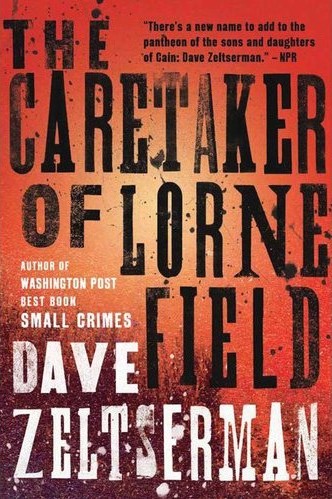
The Caretaker of Lorne Field now in paperback!


The Caretaker of Lore Field was short listed by the American Library Association as one of the best horror novels of 2010 and was a Black Quill nominee for best dark genre book of the year. The book has garnered 1000s of devoted fans and received dozens of rave reviews, including a starred review from Publisher's Weekly calling it a "Superb mix of humor and horror" and Newsday calling it a "Delicious horror-ish novel". Now that it's in paperback, Aukowies have never been cheaper or more plentiful. If you haven't already, isn't it about time that you discover this modern horror masterpiece for yourself?

Thursday, October 20, 2011

INSIDE TOP SUSPENSE: Clichés -- Love 'em or Leave 'em?

Today INSIDE TOP SUSPENSE talks about clichés. Are they okay sometimes? For example, in dialogue? Or are they the result of lazy writing? Can you live with one or two, or should you root them out? Here’s what we think.


LIBBY: When I began writing my prose was full of clichés. I actually sought them out. I mean, clichés are ideas that everyone understands and can relate to, right? We live in a world of them, particularly on TV and radio. So why not incorporate them into my writing so that readers will really “get” what I’m trying to say?

It took my writing group months to pound it into my head that wasn’t the case. Since then, in fact, I've learned clichés have the opposite effect. But it’s subtle. Instead of bringing the reader closer to an understanding of a situation or character, clichés – because they’re so widely used – tend to deaden emotion and distance us from what we’re reading. Clichés also reinforce stereotypes and stereotypical behavior. How many times can someone be “over the top” or “red as a beet” before we yawn and lose interest?

Now I try to root them out in every paragraph. But it’s tough… even after 15 years, those little buggers still pop up.

MAX: Cliches can be a conundrum, because whether a phrase or a plot turn, every cliche bears an element of truth at its core...repetition of a seeming truth is the diamond that becomes coal, over time.

In terms of phrases, clichés should be rooted out because of their over-use and the laziness they imply on the part of the writer. A trickier question is whether to root them out of dialogue, or even a first-person narrative, since the character you're writing about might quite naturally use a cliché in speech or, for that matter, when writing a memoir...after all, our first-person characters aren't often intended to be professional writers, simply somebody with a story to tell. Sometimes avoiding the cliché in dialogue or first-person narrative screws up the tone and/or betrays the characterization. It's tricky.

A clichéd scene often grows out of the conventions of genre storytelling. Conventions, unlike clichés, are often unavoidable. In crime fiction, particularly the traditional variety I prefer, conventions are part of the fabric and even of the fun. The rogue cop is going to get called into his superior's office for a bawling out. A private eye is going to have a client walk into his office, and that client may be a beautiful woman...or the female P.I. may have a handsome male client walk into her office. The latter is at least an attempt to turn the convention on its head, and that's how you avoid a clichéd treatment of a scene that is inherently conventional. In other words, treat the conventional scene in at least a somewhat unconventional way. In some cases, it's as easy as providing an interesting location. Maybe the P.I. meets the prospective client, at that client's request, in some unusual location -- even a bar or the client's home is better than the office approach. Maybe the rogue cop gets bawled out by his superior on an answer machine, and the cop says, "Blah blah blah," and fast-forwards/erases it. Again, could be a change of location -- the police shooting range, maybe, or the break room where the superior sits down and seems to be having a little friendly breaking of the bread before he hands the rogue cop his ass or his badge.

You can always try acknowledging the cliché. In one of my stories (I don't remember which), I wrote something to the effect of, "Sooner or later, when you're a private eye, a beautiful client is going to walk into your office and there's nothing you can do about it." On the other hand, my mentor at the University of Iowa Writers Workshop, the great mainstream writer Richard Yates, pointed out to that when I wrote "he broke the bottle off on the counter of the bar like a tough guy in a B movie," that didn't make it any less like a B movie. Too much self-awareness can make a writer too cute, and frankly that's at least as bad as being clichéd.

DAVE: In Jim Thompson's classic noir novel, The Killer Inside Me, Lou Ford uses clichés to strike at people and to make them squirm and fidget. 'It's not the heat, it's humidity.' 'Another thing about the weather. Everyone talks about it, but no one does anything.' 'Every cloud has a silver lining.' And so on and so on, until the poor hapless sap he's needling is dying to get away from him. That's the thing with clichés--whether it's in our plots, characters, or writing, they're annoying as hell. So as writers how do we avoid them? Vigilance. It's so easy to naturally fall into clichéd writing if you're not looking for it, and the only way to keep them out of our writing is to be always looking for them, especially when you're proofing your work.

BILL: Clichés are a dime a dozen, and a try to avoid them like the plague. When I was asked how to do that, I knew I had to think of something good. So I put my shoulder to the wheel, my nose to the grindstone, and my ear to the ground. (There are times when that semester I spent in contortionist school really comes in handy.) Here’s what I came up with.

If you’re going to avoid clichés, you have to know what they are. That requires reading books and watching movies. After a while, you learn that it’s really nothing new to have the villain tie up the protagonist and say, “I am going to set this bomb to explode in one hour, and then I’ll be leaving you. First, however, I’m going to explain to you in detail my entire fiendish scheme.”

While you’re watching movies, you’ll learn that some clichés are purely visual and won’t work too well when you’re writing a book. For example, it’s not nearly as exciting to write about how your protagonist avoided being killed by the explosion of a ten megaton bomb by running really fast and jumping really high at just the right moment. Looks cool on film, though.

Some clichés are just too good to give up. Like the psycho sidekick in the private-eye novel. Did Robert B. Parker create that one with Hawk? Plenty of people since then have given their detectives psycho sidekicks, and with great success. You probably know who I’m talking about.

By now you know what I’m talking about. You probably did from the very first. If something comes up again and again in the books you read and the movies you watch, you don’t want to do that thing. You want something new and fresh and different. And if you can’t think of anything, just do what I do. I explain that I don’t use clichés, that I’m merely sticking with the “respected conventions of the genre” or “presenting a respectful homage to some of the finest writers in the field.” It works like a charm.


Your turn now. What do you think about clichés?

Saturday, October 1, 2011

TOXICITY -- my new thriller


The reviews are coming in, and they're pretty darned good.

J. Carson Black,best-selling author of THE SHOP and DARKNESS ON THE EDGE OF TOWN, says:

"Libby Fischer Hellmann’s thriller TOXICITY is as gritty as it is spellbinding. Populated with fully-realized characters, TOXICITY introduces us to Hellmann’s signature heroine, Georgia Davis. But we meet Georgia ten years earlier, when she is a young and determined rookie on a Chicago police force. In Georgia’s debut, we see her tenacity and strength, but also her vulnerability: the seeds sown for the woman she will become. TOXICITY works on all levels, drawing the reader inexorably into a web of deceit, heart-crushing loss, and righteous fury. This wicked brew explodes in a stunning and satisfying conclusion that answers every question. Hellmann pulls no punches."

Other reviews:

"I wasn't sure what to expect, but was blown away once I began reading. The author's style is fast paced and exciting. I literally couldn't put the book down....Think CSI meets Erin Brockovich. Combine that with excellent writing and you have a book that will keep you on the edge of your seat."

"TOXICITY is an engaging story that will haunt you on many levels. The characters are developed; the reader becomes invested. I found myself furious with every character at one time or another while reading this book which just goes to show how well written this story is."

"Hellmann writes with the economy and emotional punch of classic crime novelists like Lawrence Block. And she has created a perpetrator who is complex, realistic and completely unexpected..."

You can find it here. And on Nook here. And on the other usual suspects as well.